Research & engineering notes · 3-part series

The physics behind
four-hour ember defence.

Before committing circuit boards or enclosures to production, we wrote down the three practical constraints that break rural bushfire sprinkler setups: post-front embers, 40-minute tank depletion, and infrastructure loss. Each note separates published CSIRO research from our own hydraulic assumptions.

01 · Peer-reviewed bushfire surveys

CSIRO and Bushfire CRC post-fire house loss datasets establish ember ignition share (≥85%) and unattended versus defended loss benchmarks.

02 · Australian standards & inquiries

Standards Australia AS 5414-2012 principles, Australian RCM compliance requirements, and the 2020 Natural Disaster Royal Commission findings.

03 · Open hydraulic arithmetic

Every tank runtime and flow rate figure shows its exact inputs explicitly so any rural landholder or engineer can check the division.

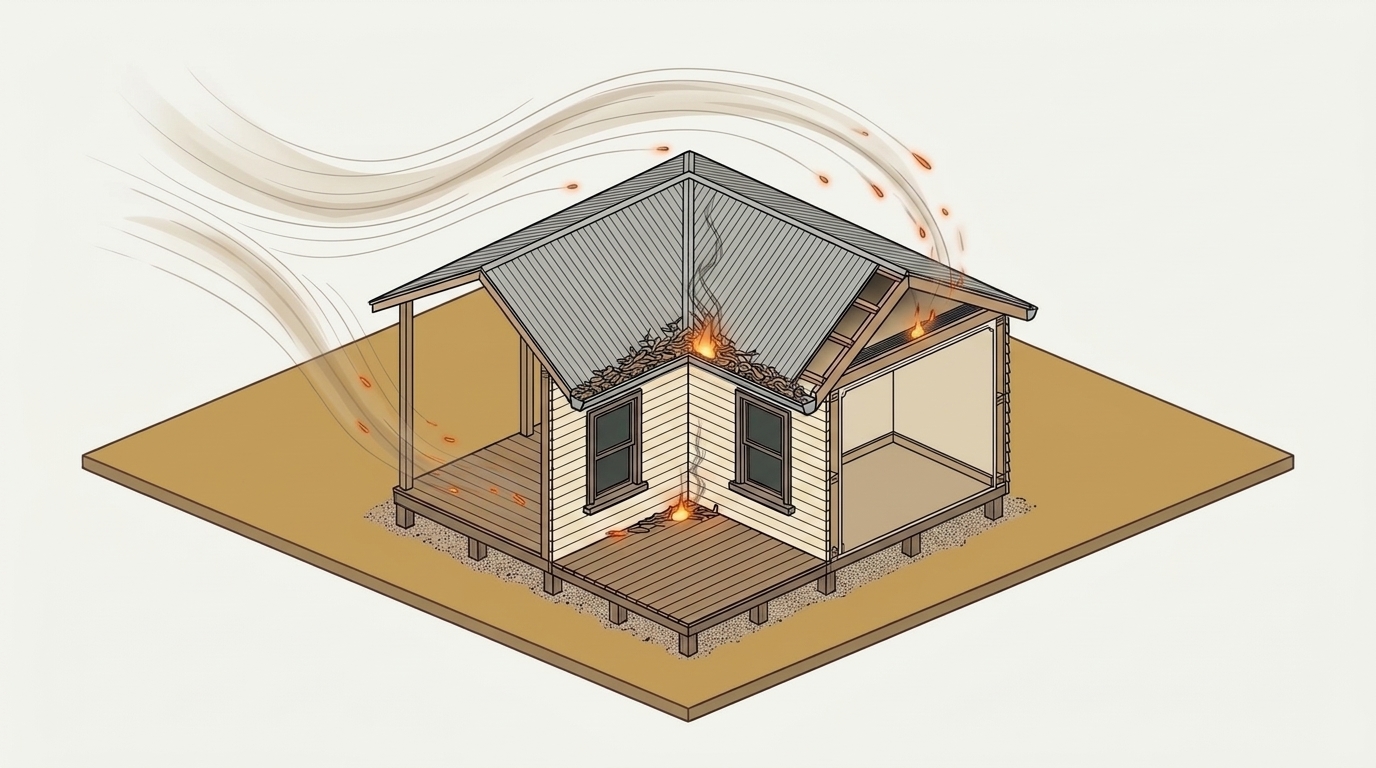
Isometric 2.5D architectural cutaway of windborne bushfire embers lodging in dry roof gutters, eaves, and a timber deck hours after a flame front passes an Australian rural home
Part 01 of 03 Ignition physics 6 min read

Why over 85% of bushfire homes burn after the flame front passes

CSIRO and Bushfire CRC post-fire surveys show windborne embers account for over 85% of destroyed Australian homes, often hours after the main fire passes. Here is why clearing grass is only half the job.

≥85%
Destroyed dwellings linked to windborne ember attack
~77%
Unattended property loss probability in surveyed fires
~13%
Loss probability when spot ignitions are actively suppressed
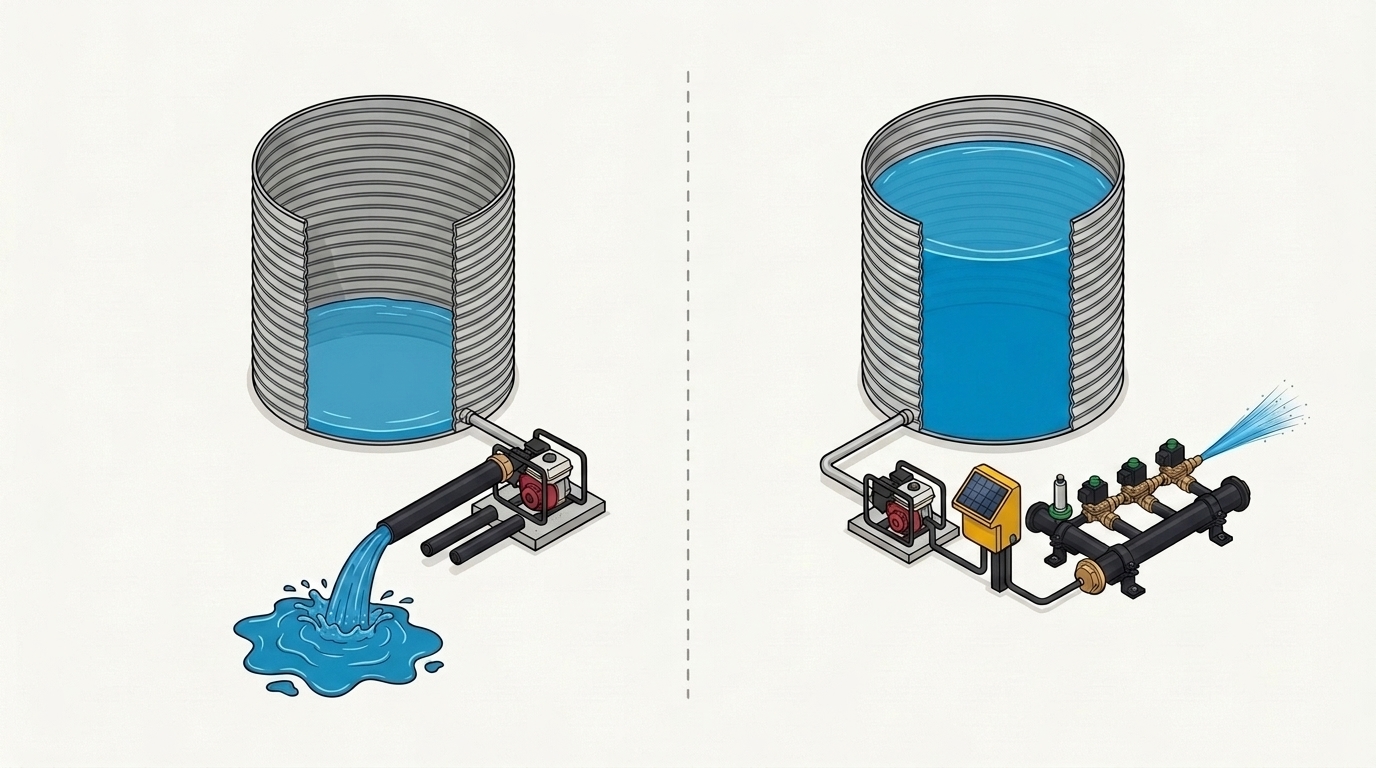
Isometric 2.5D engineering comparison showing a 20,000-litre rural rainwater tank emptying in 40 minutes under continuous open spray versus lasting over 4 hours with a 4-zone 25% pulse manifold
Part 02 of 03 Static water hydraulics 7 min read

The 40-minute trap: rainwater tank hydraulics in post-front ember storms

Dividing a 20,000-litre rainwater tank by a 450 to 500 L/min rural fire pump leaves 40 minutes of continuous spray. Here is the hydraulic arithmetic behind 4-zone latching pulse-wetting and melted-pipe breach shutoff.

40 min
20,000L tank at 500 L/min continuous open flow
4+ hrs
Same 20,000L tank under 4-zone 25% pulse-wetting
480 → 95 kPa
Manifold pressure drop caught to isolate a broken branch
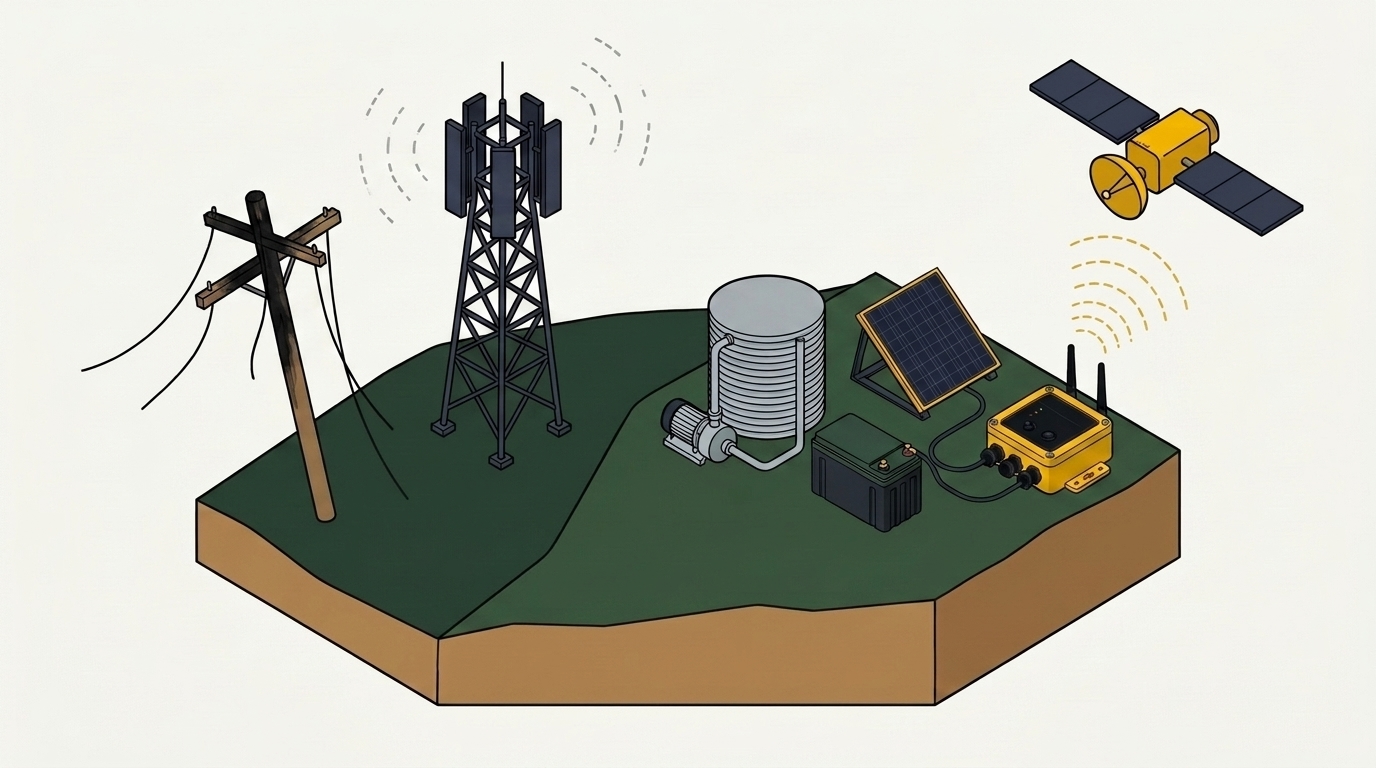
Isometric 2.5D architectural cutaway contrasting downed rural power poles and offline 4G tower against a self-powered solar, isolated lithium, and direct-to-satellite Hakea Fire controller
Part 03 of 03 Off-grid reliability 7 min read

When mains power and 4G towers fail: designing off-grid bushfire telemetry

Power poles burn first and mobile tower backup batteries drop second. Here is why Hakea Fire isolates its 20Ah lithium pack from starter cranks, fails over to direct-to-satellite, and keeps a hardwired 65°C backup independent of software and cloud.

12V DC
Extra-low voltage throughout, zero 240V mains wiring
30W + 20Ah
Dedicated solar and isolated LiFePO4 pack off starter rail
65°C
Hardwired mechanical backup with zero software in loop
Challenge an assumption

Want to test these numbers against your own block?

If your tank size, pump flow curve, or shed pipework sits outside the standard 20,000-litre assumptions above, write directly to Dan Ferguson with your setup details.